
Weight Loss Knee Pain Relief: The Science of Joint Load

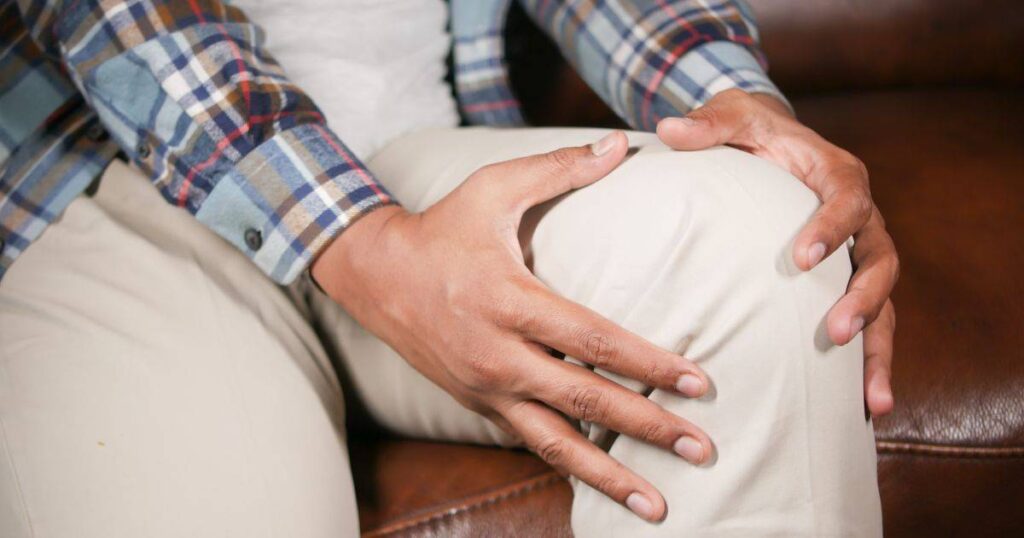
Discover how body weight multiplies mechanical force on knee joints and why losing just a few pounds provides exponential relief from joint pressure.
The human knee is one of the most intricate and overworked mechanical structures in the body. As a primary weight-bearing hinge joint, it endures constant daily stress while facilitating basic movements such as standing, walking, sitting, and climbing. However, many people view body weight as a simple direct measurement when considering its impact on joint stress. In reality, the physical strain exerted on your lower extremities does not operate on a simple one-to-one ratio. Due to the complex physics of human locomotion, every single pound of excess body weight exerts a significantly higher amount of force across the joint surface. Understanding this biomechanical multiplier effect reveals why excess weight accelerates joint wear and why weight loss knee pain relief offers such a powerful, transformative solution for long-term mobility.
Understanding Biomechanics: The 4-to-1 Knee Force Ratio
To understand how excess body weight strains the knees, one must look at the body through the lens of mechanical engineering. The leg functions as a complex lever system, with the knee joint serving as the primary fulcrum. When you stand completely still on both feet, your weight is evenly distributed. However, as soon as you take a single step forward, the dynamics change dramatically. Biomechanical studies demonstrate that during ordinary walking on flat ground, the knee joint experiences approximately four pounds of compressive force for every single pound of excess body weight.
This four-to-one ratio means that carrying twenty extra pounds adds roughly eighty pounds of mechanical pressure on knee joints with every step you take. When calculated over the course of a typical day, the cumulative burden becomes staggering. An average adult takes between 5,000 and 10,000 steps daily. Carrying twenty additional pounds means your knees must absorb anywhere from 400,000 to 800,000 pounds of additional compressive load every single day. This relentless, repetitive force puts continuous stress on the joint capsule, tendons, and supporting ligaments, laying the foundation for chronic discomfort and joint degeneration over time.
Dynamic Activities: How Running and Stairs Multiply Compressive Force

While flat-ground walking presents a fourfold multiplier, dynamic physical activities escalate joint stress even further. Static weight-bearing force occurs when body weight remains stationary, but dynamic movements introduce momentum, gravity, and acceleration. When you move on an incline, navigate elevated surfaces, or increase your speed, the compressive mechanical load knee joints endure increases dramatically.
For instance, climbing up or down a flight of stairs increases joint compressive force to approximately seven times your total body weight. Downward movement is particularly intense because gravity pulls the body down while the quadriceps muscles contract forcefully to control the descent, creating immense joint pressure body weight vectors inside the patellofemoral joint. Deep knee bends and squatting movements can elevate compressive forces up to eight times body weight, while high-impact activities like running or jumping can push peak forces to nine or ten times body weight upon impact. For an individual carrying excess weight, dynamic movements generate immense stress peaks that can exceed thousands of pounds of force per square inch with every single landing.
How Sustained Compressive Pressure Affects Joint Cartilage
Inside every healthy knee, a resilient layer of rubbery tissue called articular cartilage coats the ends of the femur and tibia. Articular cartilage serves two critical functions: absorbing physical shocks and providing an exceptionally smooth, low-friction surface that allows bones to glide past one another effortlessly. Under normal conditions, cartilage is remarkably durable. However, persistent high mechanical forces disrupt its natural structural integrity.
When sustained compressive pressure exceeds the natural load-bearing threshold of cartilage, the tissue begins to experience microscopic tearing and premature wear. Over time, cartilage loses its hydration and elasticity, thinning out faster than the body can repair it. This constant mechanical friction triggers localized inflammatory responses within the joint capsule, causing swelling, stiffness, and aching pain. As cartilage degrades further, the underlying bone surfaces may eventually rub directly against one another, accelerating the progression of osteoarthritis. Individuals experiencing chronic joint pain or suspecting structural cartilage breakdown should consult a qualified healthcare professional or orthopedic specialist to obtain an accurate diagnosis and individualized medical guidance.
The Reverse Multiplier: How Small Weight Loss Yields Major Relief
While the physics of joint compression can sound daunting, the biomechanical multiplier effect also works in reverse. This phenomenon, often called the reverse multiplier, provides tremendous encouragement for anyone seeking joint pain relief. Because joint pressure is multiplied by four during basic walking, losing even a modest amount of weight yields an exponential reduction in joint stress.
For example, losing just ten pounds of excess body weight reduces the compressive force on your knees by forty pounds per step. If you take 7,500 steps a day, that modest ten-pound weight loss relieves your knees of 300,000 pounds of force every single day. Over the course of a single week, your joint surfaces are spared more than one thousand tons of unnecessary pressure. Achieving weight loss knee pain relief dramatically breaks the vicious cycle of pain and inactivity. As joint strain decreases, physical movement becomes vastly more comfortable, empowering individuals to stay active, burn more calories, and protect their long-term health.
Practical Ways to Unload Your Knees While Getting Active
Engaging in regular physical activity is essential for managing weight and keeping joints healthy, but high-impact exercise can feel intimidating when knee joints are already inflamed. Fortunately, targeted strategies allow you to build physical fitness and burn energy while protecting your joint structures from excessive mechanical shock.
Low-impact exercises are ideal for unloading the knees during activity. Swimming and water aerobics utilize buoyancy to support up to ninety percent of your body weight, allowing full range of motion without compressive impact. Stationary cycling and elliptical trainers provide fluid, continuous motion that strengthens leg muscles without the jarring impacts of pavement running. Additionally, strengthening the surrounding musculature provides an internal bracing system. Consider focusing on key supporting muscle groups:
- Quadriceps: The front thigh muscles help absorb impact force and stabilize the knee cap during movement.
- Hamstrings: The rear thigh muscles support joint alignment and protect knee ligaments during knee bending.
- Calves: Strong lower leg muscles help buffer the ground reaction forces transmitted upward during foot strikes.
Before starting any new exercise program or significantly altering your activity level, it is important to consult a physician or physical therapist to ensure the chosen movements are safe and tailored to your specific physical condition.
Taking the Load Off for Long-Term Joint Health
Understanding the biomechanics of knee compression changes how we view body weight and joint health. The pressure exerted on your lower joints is not a simple linear measurement, but rather a multiplied force that amplifies both weight gains and weight losses.
Even modest weight reduction yields profound physical benefits, dramatically lightening the cumulative load placed on your cartilage and structural tissues each day. By embracing gentle, low-impact movements, strengthening key supporting muscles, and taking consistent steps toward a healthy body weight, you can safeguard your knee joints, preserve mobility, and enjoy an active, comfortable lifestyle for years to come.
Frequently Asked Questions
During normal flat-ground walking, every 1 pound of excess body weight exerts approximately 4 pounds of mechanical pressure on the knee joints due to leverage mechanics.
Walking down stairs increases joint compression to roughly 7 times your body weight. Gravity pulls the body downward while the quadriceps forcefully contract to control descent, multiplying forces inside the patellofemoral joint.
Yes. Reducing body weight lowers mechanical strain and reduces systemic joint inflammation, which helps slow cartilage degradation and delays the progression of knee osteoarthritis.
Low-impact activities such as swimming, water aerobics, stationary cycling, and elliptical training allow you to burn calories and build muscle strength with minimal compressive impact on the knees.
Many individuals report noticeable reductions in knee stiffness and pain after losing as little as 5 to 10 pounds, as even modest weight loss removes tens of thousands of pounds of force per day.